Olga's Gallery
November 01, 2001
Dear Friends of Art,
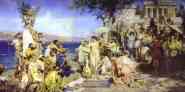 From
time to time we get letters asking us to expand the geography of the artists,
represented on the web site. Several of our subscribers asked to add the
painters of Poland. We have already the collection of Ivan
Khrutsky, who is considered to be a Russian painter of Polish origin.
Now we add the collections of Alexander
Orlowski and Henryk Siemiradzki,
also Poles but who could be classified both as Russian artists of Polish
origin, or Polish artists of the Russian school. We’ll try to explain this,
reminding you of some tragic pages of Polish history.
From
time to time we get letters asking us to expand the geography of the artists,
represented on the web site. Several of our subscribers asked to add the
painters of Poland. We have already the collection of Ivan
Khrutsky, who is considered to be a Russian painter of Polish origin.
Now we add the collections of Alexander
Orlowski and Henryk Siemiradzki,
also Poles but who could be classified both as Russian artists of Polish
origin, or Polish artists of the Russian school. We’ll try to explain this,
reminding you of some tragic pages of Polish history.
A Page from the History of Poland
Poland was once one of the largest kingdoms in Europe, successfully struggling with all its warlike neighbors. But in the late 16th century, after the death of the last ruler of the Polish-Lithuanian Jagiellonian dynasty, a new form of power was established in Poland: it became a “republic of nobility”, that is the nobles elected the King of Poland, monarchy was not hereditary, it was restricted and actually subordinate to the parliament, where the decisions were to be unanimous; every deputy had the right of veto (Liberum Veto) which practically gave him the right to stop any decision by just calling out “I disagree!” This procedure was widely exploited not only by rivals inside Poland but also by Poland’s neighbors, who bribed parliament members to put their candidate on the throne.
 The
absence of hereditary monarchy led to the fact that the death of a king
was always followed by periods of anarchy and short civil wars. Of course,
the Polish throne was a center of European policy, diplomacy and intrigues.
The
absence of hereditary monarchy led to the fact that the death of a king
was always followed by periods of anarchy and short civil wars. Of course,
the Polish throne was a center of European policy, diplomacy and intrigues.
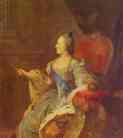
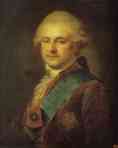
In 1733-1763, the country was ruled by the King of Poland and elector of Saxony Frederick Augustus III, who prepared a number of reforms, which aimed to strengthen Poland, convert the Polish electable monarchy into a hereditary and unrestricted one. These plans did not suit the neighbors, including both Russia and Prussia. Catherine II the Great stepped into the fight for the Polish heritage under the slogan “The Polish King should be a Pole from the Pyast dynasty!” (Pyasts were the first Polish kings) The slogan appealed to many Poles. The Russian party was supported by the old noble families of the Czartoryskiches and Poniatowskis, both families of Pyast origin. The Russians chose Stanislas Augustus Poniatowski to be their candidate for the throne.
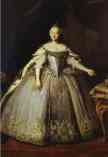 Under
the Empress Elizaveta Petrovna he had been a diplomat in the Russian court,
and, as a diplomat, had been close to
Under
the Empress Elizaveta Petrovna he had been a diplomat in the Russian court,
and, as a diplomat, had been close to 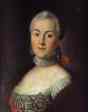 Catherine
(at that time Grand Duchess and the wife of the heir Peter Feodorovich,
future Peter III). This fact gave rise to a theory that Catherine II wanted
to make Poniatowski the king as her former favorite. But that was not the
main reason. Catherine’s own first choice was the young prince Adam Czartoryskich,
but her advisers characterized him as too clever and rich, too patriotic
and independent, ‘he dreams of saving Poland’, and that contradicted with
Catherine’s plans. Later while reading A History of Frederick II
by Abbot Denin, in which the author said that Catherine made Poniatowski
the King for his physical beauty and cleverness, she wrote on the margins
of the book, “He was promoted by Russia as a candidate to the throne, because
of all candidates he had the least rights for the throne and would have
been more grateful to Russia than any other candidate…”
Catherine
(at that time Grand Duchess and the wife of the heir Peter Feodorovich,
future Peter III). This fact gave rise to a theory that Catherine II wanted
to make Poniatowski the king as her former favorite. But that was not the
main reason. Catherine’s own first choice was the young prince Adam Czartoryskich,
but her advisers characterized him as too clever and rich, too patriotic
and independent, ‘he dreams of saving Poland’, and that contradicted with
Catherine’s plans. Later while reading A History of Frederick II
by Abbot Denin, in which the author said that Catherine made Poniatowski
the King for his physical beauty and cleverness, she wrote on the margins
of the book, “He was promoted by Russia as a candidate to the throne, because
of all candidates he had the least rights for the throne and would have
been more grateful to Russia than any other candidate…”
On October 5, 1763 Augustus III died. On August 26, 1764 the parliament elected count Stanislas Augustus Poniatowski the king of Poland.
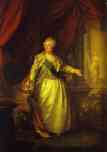 The
election of Poniatowski was not only a Russian victory over the Saxon party,
but also over the Franco-Austrian party, who had actively fought for their
own candidate. Now, when Russia had its puppet on the throne of Poland,
reforms could be made. Weak Poland was a corridor for German and Turkish
aggression against Russia. Strong Poland without the archaisms of Liberum
Veto could have supported Russia on her southwestern borders and in a war
against Turkey. But such a Poland was against the interests of Prussia
(now part of Germany); Russia’s ally Frederick II the Great waited long
to take over the lands of “Prussian Poland”. He was against all the reforms
that could make Poland capable of having an independent policy, and he
was for preserving “liberties” as a means of intrigue. Frederick II managed
to intimidate Catherine II that social reforms in Poland could lead to
the strengthening of the revolutionary and patriotic elements in Poland,
which could in its turn bring revolution to Russia.
The
election of Poniatowski was not only a Russian victory over the Saxon party,
but also over the Franco-Austrian party, who had actively fought for their
own candidate. Now, when Russia had its puppet on the throne of Poland,
reforms could be made. Weak Poland was a corridor for German and Turkish
aggression against Russia. Strong Poland without the archaisms of Liberum
Veto could have supported Russia on her southwestern borders and in a war
against Turkey. But such a Poland was against the interests of Prussia
(now part of Germany); Russia’s ally Frederick II the Great waited long
to take over the lands of “Prussian Poland”. He was against all the reforms
that could make Poland capable of having an independent policy, and he
was for preserving “liberties” as a means of intrigue. Frederick II managed
to intimidate Catherine II that social reforms in Poland could lead to
the strengthening of the revolutionary and patriotic elements in Poland,
which could in its turn bring revolution to Russia.
At last the Russian government got tangled in these contradictions and agreed to partition Poland. Russia, Austria, and Prussia partitioned Poland among themselves three times – in 1772, 1793, and 1795. After the last partition Poland virtually ceased to exist as an independent state.
The Poles revolted against foreign rule a number of times. One of the heroes in the struggle for independence was Thaddeus Kosciuszko, who had served with George Washington’s army and became brigadier-general during the American Revolution. In one of the Kosciuszko’s groups, the future artist Alexander Orlowski fought for a while.
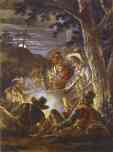 But
after each uprising the Poles were defeated, and for many years the Polish
nation existed only in the minds and hearts of its people. The Polish families,
wherever they lived, carefully preserved the language, the faith and the
traditions of their motherland. Among such patriotic families were the
families of the Khrutskys and the Siemiradzkis who gave the world the painters
Ivan Khrutsky and Henryk Siemiradzki.
But
after each uprising the Poles were defeated, and for many years the Polish
nation existed only in the minds and hearts of its people. The Polish families,
wherever they lived, carefully preserved the language, the faith and the
traditions of their motherland. Among such patriotic families were the
families of the Khrutskys and the Siemiradzkis who gave the world the painters
Ivan Khrutsky and Henryk Siemiradzki.
Poland regained its sovereignty in 1918, when the Head of the Soviet government Vladimir Lenin decreed Poland an independent state.

